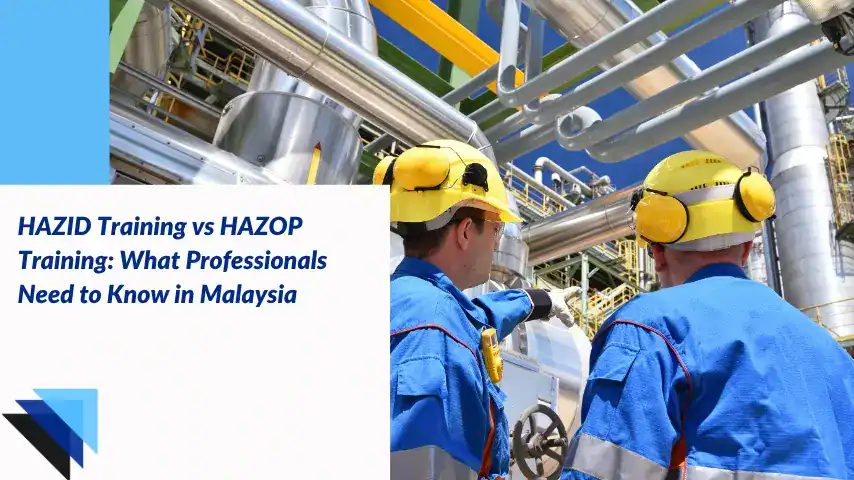
HAZID (Hazard Identification) Training and HAZOP (Hazard and Operability) Training are both essential components of risk management in industries like oil and gas, manufacturing, and chemical processing. While they share the goal of improving safety and operational efficiency, they differ in focus, methodology, and application.
Industrial safety is not a choice but a necessity in high-risk sectors like oil and gas, petrochemicals, and manufacturing. These industries are the backbone of Malaysia’s economy, but their operations expose them to significant hazards. Even a minor oversight can result in severe consequences, impacting not only businesses but also surrounding communities and the environment. As a result, proactive safety approaches like HAZID (Hazard Identification) and HAZOP (Hazard and Operability) have become essential tools.
This article explores the critical roles of HAZID and HAZOP training in Malaysia’s industrial landscape. By understanding their principles, benefits, challenges, and applications, professionals can better implement these frameworks to ensure safety and operational excellence.
Looking to Improve Your Risk Management?
Enroll in our HAZID and HAZOP training programs designed specifically for Malaysian industries.
- Why Is Safety Important in Malaysian Industries?
- What is HAZID?
- What is HAZOP?
- What Are the Key Differences Between HAZID and HAZOP?
- What Are the Benefits of HAZID and HAZOP for Industries?
- What Are the Main Challenges in Implementing HAZID and HAZOP?
- Are HAZID and HAZOP Complementary or Overlapping?
- How Is HAZOP Applied Across Malaysian Industries?
- How Wellkinetics Can Help
Why Is Safety Important in Malaysian Industries?
Over the years, Malaysia has experienced several industrial mishaps that highlight the importance of stringent safety protocols. For example, the 2020 explosion at a petrochemical plant in Johor resulted in serious injuries and severe financial losses. Similarly, fires on offshore rigs near Terengganu have demonstrated the potentially catastrophic consequences of neglected safety measures. These incidents underline the pressing need for comprehensive risk management frameworks.
In Malaysia, regulatory authorities like the Department of Occupational Safety and Health (DOSH) uphold laws such as the Occupational Safety and Health Act 1994 (OSHA 1994) to ensure safer practices across industries. Additionally, compliance with global standards like ISO 45001 has elevated the importance of adopting hazard management methodologies like HAZID and HAZOP.
But safety isn’t just about following regulations. It’s about creating a culture of accountability, enhancing productivity, and building trust with stakeholders, including local communities. This makes preventive frameworks like HAZID and HAZOP more than compliance tools; they’re essential for sustainable industrial growth.
What is HAZID?
HAZID, which stands for Hazard Identification, is a systematic method used to pinpoint potential hazards at the initial stages of a project. By taking a proactive stance, it enables organizations to address risks early, preventing them from developing into costly or hazardous issues.
What Are the Key Principles of HAZID?
The key principles of HAZID focus on early detection and evaluation of hazards to minimize risks and improve the safety and efficiency of projects.
1. Early Risk Management
HAZID typically occurs during the initial conceptual or design phase to identify hazards and mitigate risks from the outset.
2. Multi-Faceted Risk Analysis
This methodology considers not just operational risks but also environmental, health, and safety threats, offering a holistic risk perspective.
3. Collaborative Workshops
HAZID sessions bring together a wide range of expertise—from design engineers to safety consultants—to ensure comprehensive hazard identification.
What Are the Goals of HAZID Training?
The primary purpose of HAZID training is to enable participants to conduct effective hazard identification workshops. Key outcomes of the training include:
- Skills to facilitate brainstorming and use tools like checklists.
- Ability to document hazards and suggest mitigation measures.
- Knowledge of regulatory requirements and compliance documentation.
Master Early Hazard Identification with HAZID Training
Learn how to lead effective hazard identification workshops to mitigate risks at the project outset.
What is HAZOP?
HAZOP, short for Hazard and Operability, differs from HAZID by focusing on operational processes and identifying how variations in those processes could lead to unsafe conditions. While HAZID provides a high-level view, HAZOP zeroes in on specific systems and components for detailed analysis.
What Are the Key Principles of HAZOP?
The key principles of HAZOP involve breaking down the process into manageable sections, identifying potential deviations using guide words, and assessing the consequences and causes of these deviations. The goal is to ensure comprehensive risk mitigation and improve system reliability.
1. Deviation-Oriented Investigations
HAZOP focuses on how deviations from normal operational parameters (e.g., higher pressures, reduced flows) might lead to failures or inefficiencies.
2. Structured Methodology
Using guidewords like “More,” “Less,” and “Reverse,” HAZOP systematically evaluates every possible deviation in operational processes.
3. Granular Analysis
Each component of a system is thoroughly reviewed to identify both safety risks and opportunities for operational improvement.
What Are the Goals of HAZOP Training?
HAZOP training equips professionals with the capability to:
- Facilitate detailed risk reviews focused on deviations.
- Use worksheets to log findings and derive actionable recommendations.
- Validate operational designs against both regulatory and efficiency benchmarks.
What Are the Real-World Applications of HAZOP in Malaysia?
HAZOP has been instrumental in Malaysia’s petrochemical industry. For instance, during the commissioning phase of a refinery project in Johor, a HAZOP study identified risks related to temperature control and chemical flow. By addressing these early on, the company avoided costly repairs and potential safety violations.
Similarly, in the LNG (Liquefied Natural Gas) sector, HAZOP has optimized safety for storage and transfer systems, ensuring compliance with international safety protocols.
RELATED: How to Conduct a HAZOP Study: A Comprehensive Guide for Malaysian Industries
Enhance Process Safety with Advanced HAZOP Training
Gain the skills to conduct detailed operability studies and prevent costly operational failures.
What Are the Key Differences Between HAZID and HAZOP?
The main difference between HAZID (Hazard Identification) and HAZOP (Hazard and Operability Study) lies in their purpose and scope. HAZID focuses on the early identification of potential hazards during the conceptual and design stages of a project, while HAZOP is a more detailed analysis aimed at identifying and mitigating operational risks during the engineering and commissioning phases. Both methodologies are integral to comprehensive safety management but are applied at different project stages with distinct objectives.
| Aspect | HAZID | HAZOP |
| Focus | Broad hazard identification | Analysis of deviations from operational parameters |
| Stage | Early-stage (concept/design phase) | Operational phase or detailed design phase |
| Methodology | Checklists, brainstorming | Guidewords, scenario planning |
| Team Composition | Wide collaboration (engineers, safety experts, environmentalists) | Specialized experts with deep process knowledge |
| Documentation | Hazard registers, risk mitigation measures | Detailed worksheets, deviation analysis |
| Applications | General industrial safety and environmental risks | Process-heavy industries like petrochemicals |
RELATED: HAZOP vs. HAZID: Key Differences, Applications, and When to Use Each in Malaysia
What Are the Benefits of HAZID and HAZOP for Industries?
Both methodologies offer invaluable advantages to industries.
What Are the Key Benefits of HAZID in Industrial Projects?
HAZOP ensures a detailed and thorough identification of process-related risks by systematically analyzing deviations, helping to prevent operational failures and promote safer, more efficient processes.
1. Cost-Effective Risk Mitigation
Early identification of hazards reduces downstream costs associated with equipment redesign or operational disruptions.
2. Regulatory Streamlining
HAZID aligns with Malaysia’s OSHA requirements, ensuring smoother project approvals.
3. Sustainability
By prioritizing environmental factors, HAZID supports sustainable development projects, especially in eco-sensitive areas like rainforests.
What Are the Key Benefits of HAZOP for Industrial Risk Management?
HAZID (Hazard Identification) provides a proactive approach to identifying and addressing potential risks early in a project’s lifecycle, ensuring better safety, compliance, and sustainability outcomes.
1. Operational Efficiency
HAZOP improves the reliability of systems by identifying and correcting inefficiencies or safety gaps.
2. Incident Prevention
Focusing on deviations minimizes the risk of catastrophic failures, such as explosions or system breakdowns.
3. Global Standards Compliance
For Malaysia’s export-heavy industries, complying with international safety standards is a competitive advantage.
What Are the Main Challenges in Implementing HAZID and HAZOP?
No methodology is without its challenges, and both HAZID and HAZOP pose unique implementation hurdles.
What Are the Key Challenges in Implementing HAZID in Malaysia?
HAZID challenges arise from the need for comprehensive data and skilled professionals to ensure effective hazard identification processes.
1. Limited Training Resources
A lack of accessible training centers in Malaysia restricts the availability of qualified professionals.
2. Resistance to Change
Companies may find initial investments in training and workshops too high, delaying adoption.
What Are the Key Challenges in Implementing HAZOP in Malaysia?
HAZOP challenges center on the complexity of systematic analysis and the extensive collaboration required among multidisciplinary teams.
1. High Technical Requirements
Facilitating HAZOP sessions demands detailed knowledge of operations, which smaller firms may struggle to provide.
2. Time Constraints
HAZOP studies are time-consuming and may delay project completion if not planned efficiently.
Overcome Implementation Challenges with Expert Support
Our facilitators and consultants help you navigate technical, cultural, and resource hurdles for successful adoption.
Are HAZID and HAZOP Complementary or Overlapping?
Rather than being alternatives, HAZID and HAZOP complement each other. A well-implemented HAZID process sets the foundation by identifying risks, which HAZOP then addresses in greater detail.
For example, during the development of a biofuel production plant in Selangor, HAZID identified potential environmental risks and broad operational hazards. Subsequently, HAZOP was conducted to refine process safety, focusing on detailed assessments of feedstock handling and temperature controls.
How Is HAZOP Applied Across Malaysian Industries?
HAZOP methodologies have been widely applied across diverse sectors in Malaysia, ensuring a comprehensive approach to risk management and operational safety.
Oil and Gas
Malaysia’s oil and gas sector, which includes offshore platforms and refineries, benefits immensely from both HAZID and HAZOP. HAZID addresses high-level environmental hazards, while HAZOP ensures operational safety in high-pressure systems.
Renewable Energy
From solar farms to hydropower stations, renewable energy projects leverage HAZID to assess construction risks and environmental impacts. HAZOP is used post-installation to optimize generator performance and system reliability.
Manufacturing
For factories producing chemicals, electronics, or automotive parts, HAZID ensures initial safety design, while HAZOP identifies and corrects inefficiencies in automated processes.
How Wellkinetics Can Help
When it comes to implementing effective risk management frameworks like HAZID and HAZOP, Wellkinetics offers unparalleled expertise and tailored solutions. Here’s how we can assist your organization:
- Training Programs
We provide industry-recognized HAZID and HAZOP training programs, equipping professionals with the skills to conduct effective hazard assessments. These programs combine theoretical knowledge with practical applications to ensure participants are job-ready.
- Facilitation of Workshops
Our experienced facilitators lead hands-on workshops that simulate real-world scenarios, enabling teams to practice hazard identification and operability analysis in a controlled environment. This fosters collaboration and builds confidence in managing risks.
- Regulatory Compliance Support
We ensure your organization meets Malaysia’s stringent safety regulations, including OSHA 1994 and Environmental Quality Act guidelines. We also assist with audit preparation, compliance documentation, and ongoing regulatory updates.
- End-to-End Risk Management
From project inception to operational phases, We provide comprehensive support, ensuring risks are identified, mitigated, and managed effectively throughout the lifecycle of your projects.
By partnering with Wellkinetics, your organization gains access to a team of experts dedicated to elevating safety standards and achieving operational excellence. With their support, you can confidently navigate the complexities of risk management and focus on driving success in your industry.
Learn more about our process safety consulting services.